
How to succeed with nutrition in Vasaloppet (90 km) and Birkebeinerennet (54 km)
Long-distance cross-country ski races last for many hours and are often performed at a high relative intensity. This places significant demands on the body’s carbohydrate availability.
In the article “How much carbohydrate is needed during hard physical activity to maintain performance?” published by Team Aker Dæhlie it is explained how carbohydrate intake during exercise is crucial for maintaining speed, intensity, and technical quality over time.
The article explains:
How the body’s glycogen stores (stored carbohydrates in muscles and liver) gradually become depleted during prolonged high-intensity activity. That reduced carbohydrate availability leads to decreased work capacity — what many athletes experience as “hitting the wall.”
That recommended carbohydrate intake increases with duration:
~30 g/hour during shorter sessions
~60 g/hour during 45–90 minutes
~90–120 g/hour during sessions lasting more than 90 minutes
For races lasting several hours, such as Vasaloppet and Birkebeinerennet, the recommendation is therefore to aim for 90–120 grams of carbohydrates per hour to maintain performance.
This forms the foundation for the recommendations below.
Nutrition the last 24 hours before the race
Nutrition 24–36 hours before: Fill your glycogen stores
Goal: Start the race with full energy stores.
Recommendations:
7–10 g carbohydrate per kg body weight in the final 24 hours spread across 4–6 meals
Choose low-fiber, easily digestible carbohydrate sources
Examples:
Breakfast: Rice porridge + banana + honey
Lunch: Rice + lean meat (chicken/white fish) + low fat
Snack: White bread with jam/honey/chocolate spread
Dinner: Rice + chicken/white fish + sports drink/cola
Evening meal: White bread with carbohydrate-rich toppings + sports drink
Avoid:
Large amounts of fat
Very high-fiber foods
New and untested foods
Race Morning (3–4 Hours Before Start)
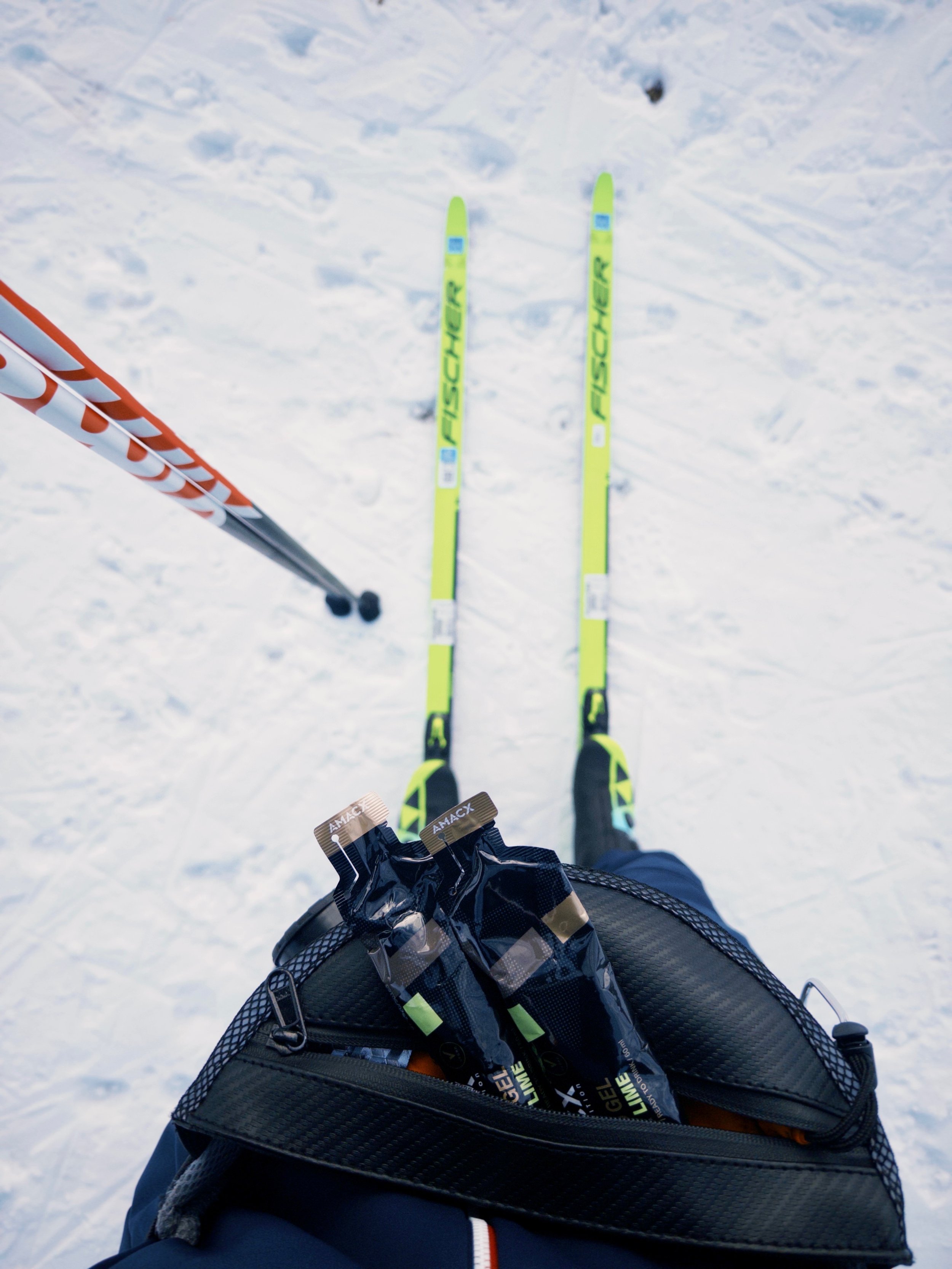
"I normally eat two slices of white bread with chocolate spread and drink two cups of black coffee on competition days" - Kasper Stadaas winner this year’s Marchialonga 2026
Breakfast: 1–4 g carbohydrate per kg body weight.
Example (75 kg athlete):
2–3 slices of white bread with jam/honey/chocolate spread or rice
1 bowl of rice porridge
300–500 ml sports drink
Total: 75–300 g carbohydrates*
*As displayed in the total amount it showcases the importance of testing and adjusting the last meal and carbohydrate amount in accordance with your own experiences. As a general advice we can recommend 2g pr.kg bodyweight as most people will not struggle with gastronomical issues with this amount.
30–60 minutes before start:
20–30 g carbohydrates (gel or sports drink)
Fueling Plan – Vasaloppet (90 km)
For many athletes this race lasts 6–8 hours.
Target: 90–110 g carbohydrates per hour
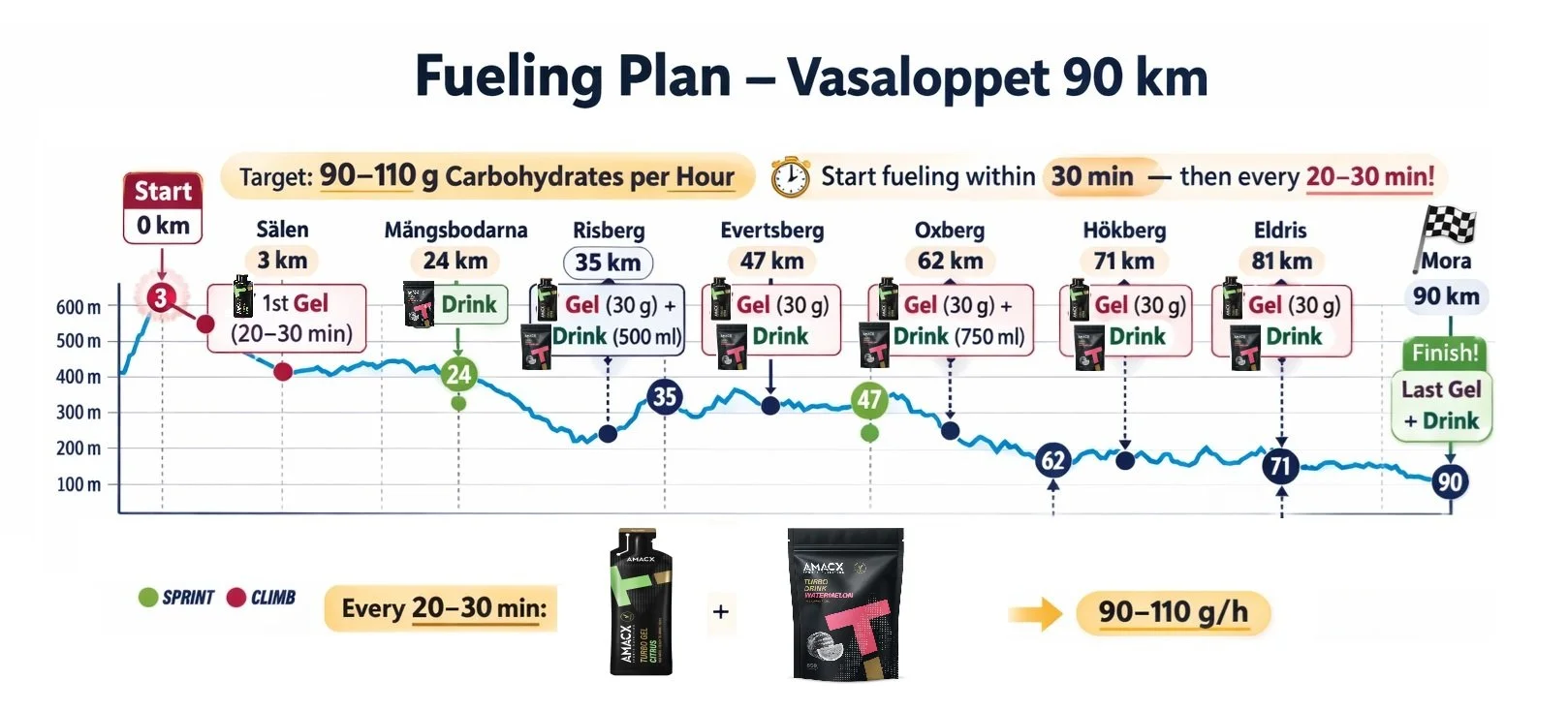
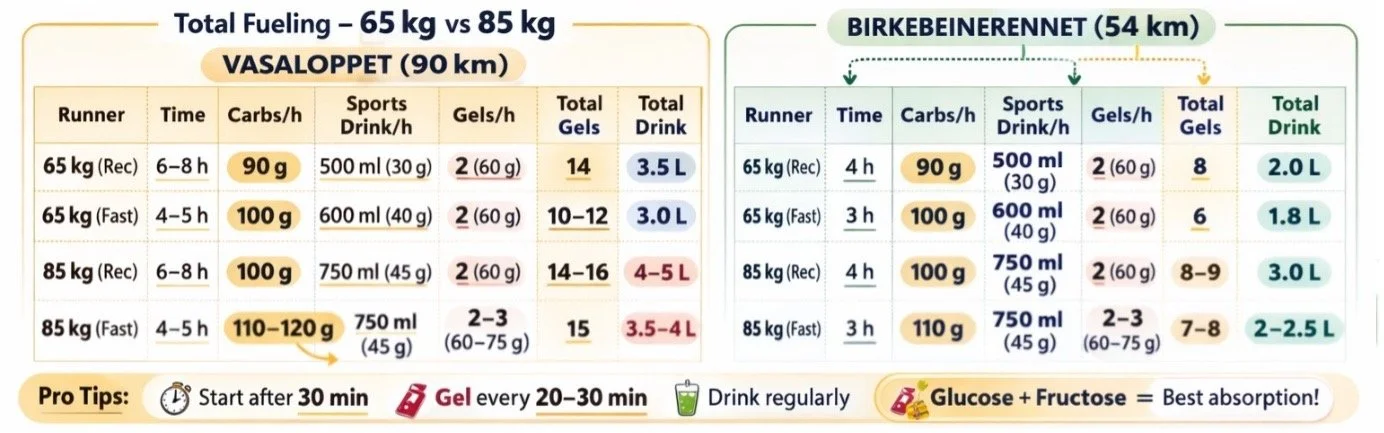
How much if you are 65 or 85kg in numbers for Vassaloppet ?
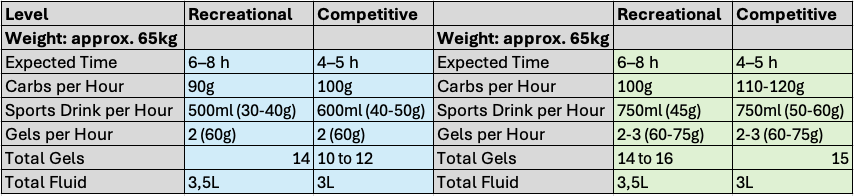
Fueling Plan – Birkebeinerennet (54 km)
Duration: Typically 2.5–5 hours.
Target: 90-110 g carbohydrates per hour
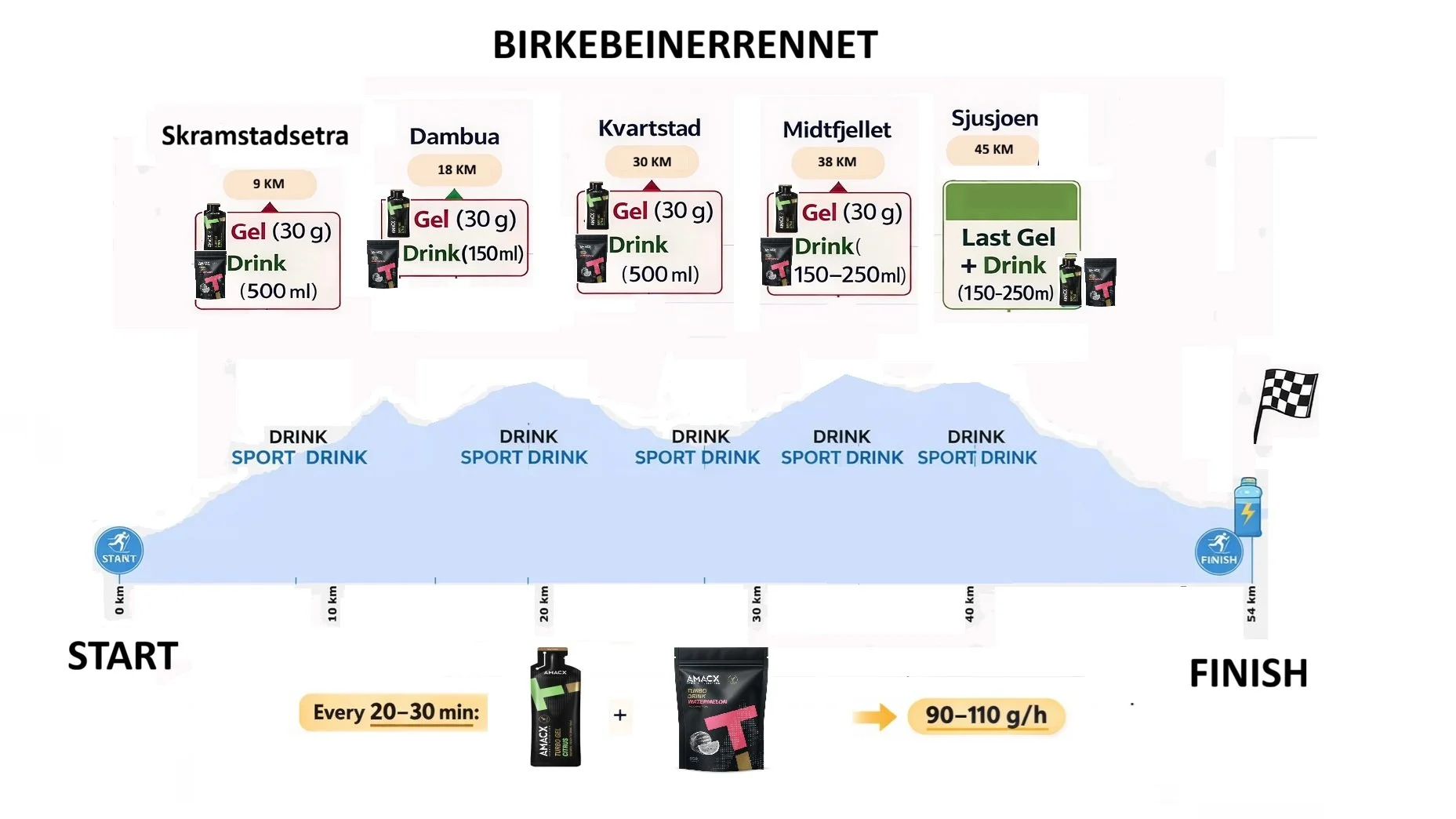
How much if you are 65 or 85kg in numbers for Birkebeinerrennet ?
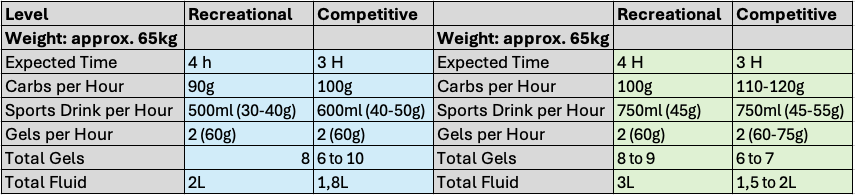
Some tips and practical execution for your race
Start early
First gel after 20–30 minutes
Then 1 gel every 20–30 minutes
Drink consistently between aid stations
Small, frequent intake
Do not wait until energy drops
Gel vs Sports drink. What should you choose?

Best solution: Combine both. Sports drink covers baseline intake, gels ensure you reach 90–120 g/hour.
Key success factors
Train your gut beforehand
Use products with multiple carbohydrate sources (glucose + fructose)
Start fueling early
Eat before fatigue sets in
Plan exactly when and where you take each gel
Summary strategy
For both Vasaloppet and Birkebeinerennet:
Fill glycogen stores in the final 24–36 hours
Eat well 3–4 hours before start
Aim for 90–110 g carbohydrates per hour during the race
Combine gels and sports drink
Start early and fuel consistently
As emphasized in the article from Team Aker Dæhlie:
“If you want to maintain high intensity over time, you must continuously supply your body with enough carbohydrates” – Hans Kristian Stadheim, coach Team Aker Dæhlie